Showing posts with label emergency preparedness. Show all posts

Tuesday, May 21, 2019

Do You Have The Complete Emergency Preparedness Supply List?


Are you overwhelmed by everything you need to do to prepare for a natural or man-made disaster? Everyone is at first! That's why we're sharing a simple to use checklist of everything you will need when #SHTF. We followed the recommended supply list from FEMA and turned it into a free, easy to follow checklist. The list covers the essentials and suggested items to have at home, at work, and at school. Have peace of mind knowing your family can be ready anywhere you are!


You can download the free list here: Complete Emergency Preparedness Supply List


Wednesday, January 16, 2019

What I Learned About The In-Between Things


Are there disaster situations where you would want to save non-essential material possessions? Probably so.


Working for Emergency Zone, I spend plenty of my waking hours thinking about how to prepare for emergencies and what to do if one strikes. When a natural disaster came to my own doorstep, I found out that no amount of preparation and studying the subject could simulate the sense of reality sinking in when you see it with your own eyes from your own house. Last year, during another dry summer out west, a series of large fires broke out around my community and the surrounding towns and cities. A number of communities were evacuated; and the nearby hills, walking distance away, were illuminated by a mountain of brown smoke. I carefully kept updated on the status of the situation, until word came in that my neighborhood was given the pre-evacuation designation. People opened their homes to the evacuees and prayers rose up from all the chapels.

In spite of how near the fire was, the wind was blowing it towards an already evacuated town, meaning I had several days to assess the situation. But the wind only had to change direction and my home would be in danger. We filled buckets and pots full of water and put them around the house, in the hopes of reducing the damage if the fire made it that far. We reviewed our pre-evacuation checklist. The flames were cresting the hill into view when I made the decision to evacuate and stay with relatives.

When your life isn't at risk, but your possessions are.


In spite of all the situations I have considered, this was one I overlooked. I had days to decide what I would leave behind and what I would bring. If I really wanted to, I could have packed the whole house into trucks and trailers and made multiple trips in that amount of time.

Make no mistake. Family is what's important in life and the value of material things cannot come close in comparison. As long as you have each other, you are truly rich. In an immediate emergency, trying to save your possessions could get you killed. But this situation was different.
Thanks to the valiant efforts of the firefighters, my neighborhood was spared. But say the wind changed. Say that 2% chance of my house burning down came true (When it's your house, that number feels a lot bigger). I would be sitting there thinking how I could have saved more of my possessions at no risk to my life or my family. Sure, you can get your house insured and you can buy several replacement things, but there are things of yours that are sentimental and could never be replaced. Precious family heirlooms, memorabilia, things with a deep, personal history that you look forward to passing on to the next generation. These are the in-between things, floating in the grey area between the important and the unimportant. They especially become a concern with the more frequent, slow-moving disasters where your odds are good, but the danger is much higher than normal. How do you decide what is worth putting in the effort to save, and how do you weigh that against the risk of it being lost?

Losing your house is a tragedy, and there's no way to make it not a tragedy. That's not what I'm trying to do here. This is about easy, simple things you can do to reduce the impact of such an event. It's not worrying and obsessing. It's preparing.

Three categories

All you need to do is divide the things in your life into three categories:

  • Necessities
  • Non-Necessities
  • Sentimental (In-Between Things)
You may have the first two already separated out, especially if you are a prepper, but I will go over these, too, to show where they fall in relation to the in-between things.


Necessities.

This is what preppers live for. Collecting the supplies you need to survive for when all hell breaks loose. Shelter. Water. Medical supplies. When you are sheltering in place, these supplies can be extensive; but, since this article is focusing on evacuation, these are the things that will go in your "bug out bag." Here is an Ultimate Guide to 72 Hour Kits and bug out bags. Bug out bags can also carry a few of the smaller sentimentals, like a picture of your family.

Non-Necessities.

To minimize the impact of losing your possessions (including some of the sentimental ones), do three things:
  • Get it insured. Homeowner's insurance if you own, renters insurance if you rent. Your landlord's policy most likely doesn't cover your personal possessions.
  • Get it digitized. Take well-lit photos of your belongings in every room of the house, especially the valuable things. This is for the insurance company, but it may also allow the memory of things to live on. Scan and digitize photo albums, documents, journals and letters. In many cases, the digitized will not be the same as holding the original, but it's better than nothing.
  • Back it up. If your files were not already valuable to you before, they are now that they contain all of your pictures and precious documents for future generations. There are many options for data backup, and they all have their pros and cons. Cloud storage means your files will always be miles away from any local disaster, while external storage is the most difficult for hackers to access and could make a great addition for your bug out bag.

The In-Between Things.


After doing everything above, the remaining part is simple. Make a list of those irreplaceable things in your house. This is much easier to do now than when you are frantically putting things in order with the approach of a disaster.

Not everything on the list has to have some kind of deep meaning. Simply stated, an in-between thing is something an insurance payout cannot replace. You keep that autographed poster of your favorite band because you would rather have it than the money it's worth, right? Might as well put it on the list. Still, the list should be short. If it's not, that either means you curate a personal museum of artifacts, or that you should re-prioritize where material things belong in your life.

The hardest thing, by far, is assessing an incoming disaster and deciding when the risk is significant enough to go to the trouble of moving the belongings on the list out. If you have your list stored alongside your emergency supplies, however, you will be better prepared and equipped to make these decisions in the moment.

Make note of what things you will need help with transporting, like an antique piano. These belong in a subcategory, and you decide beforehand how high the risk has to be before you enlist support in moving them out of the area. You should make friends with your neighbors, so you can help each other during a crisis and so you know who to trust. A stereotypical prepper thinks his neighbors would murder his family for a bottle of ketchup as soon as things go south, but the truth is disasters bring out the best in people more often than they bring out the worst.


When talking about survival and emergency preparedness, discussing nonessential material belongings can seem counterintuitive. Could a fondness for material things bog down our chances for survival? My thoughts go to my grandmother, who passed a few months prior to the fires at the age of 101. She was a serious prepper ready for the end times and very familiar with poverty and survival from her early life. In spite of this, she was very sentimental about her possessions, and her house was filled with all kinds of art and antiques. If she could find that balance, maybe we can, too.

Thursday, December 27, 2018

12 Life Saving Items to Keep in Your Car This Winter


Picture this: it’s late at night and you are stranded on the side of the road. Snow is falling around you, and your car won't start. There is no heater, and your phone is dead. With the following twelve things in your car you will be better equipped to help yourself, and/or wait out the storm until help arrives. 

1. Ice Scraper and Brush: Being able to see out your windows is crucial when driving. By having an ice scraper you will be able to better see out your windshield and other windows. 

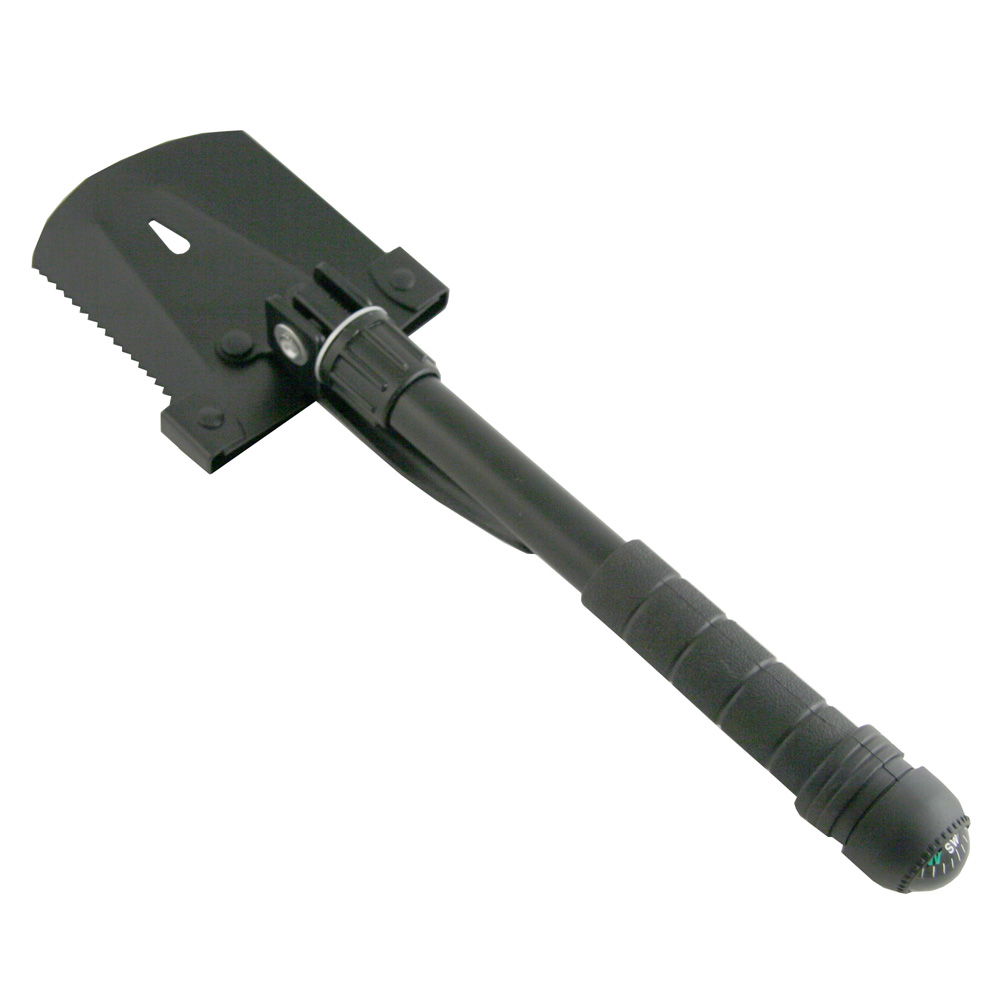
2. Shovel: A collapsible shovel is small enough to fit in your car, and can be a life saver to help you if your car gets stuck. 

3. Warmth: If your car dies so does your heater. In winter time this can be deadly, especially if you have no way to stay warm. Whether that's with a blanket or extra clothing stored in your car, ensure there is a way to keep your body warm. 

Friday, November 30, 2018

If Black Friday Is Deadly, Imagine a Disaster


Picture this: You are getting ready to do your Black Friday shopping at your local Walmart with a plan all mapped out for getting the best deals. You arrive early and get a great parking spot. It must be your lucky day; little do you know a man is about to fly into a deadly rage and open fire over that parking space. On November 25th, 2016 this actually happened at a Walmart in Reno, Nevada, where a Black Friday shopper was shot and killed over a parking space.


Now imagine that either a wildfire, blizzard, hurricane, or earthquake tore through your town. Your family is starving and on the brink of hypothermia as there is no power. Since 2006, 12 people have died and 117 people have been injured on Black Friday; if people are ready to kill each other for a sale what will they be capable of when the lives of their families and children are at stake?


3 Tips on How to Better Prepare Yourself for the Chaos


Have your emergency kit in an unmarked bag:

An emergency kit is a life saver, having others know about your supplies... that can be deadly. If people are willing to shoot another for a parking spot, imagine what they would do if you are advertising survival gear. An ordinary looking backpack allows you to better blend in with the crowd and increases your safety in an emergency.


Have a plan ahead of time:

A disaster can happen any day at any time. If you work an 8 hour job, then 1/3 of your time is spent at your work. If your child attends school, then they are there between 6-7 hours a day. If they are in extracurricular activities then they are there even longer. Statistically, there is about a 33% chance you won’t be with your family when a disaster strikes.
Planning ahead can help you know what to do when an emergency occurs. Schools and workplaces should have an emergency plan already laid out, being aware of what that plan is ahead of time can help you better structure your own. Knowing what your child's school will do can help you know when and where you can pick them up and head to an emergency shelter, or if possible a remote bug-out location.

Have extra food and medication stored: 

The hope is that when a disaster strikes help arrives rather quickly, however this is not always the case. After Hurricane Michael, homes were broken into and ransacked for supplies. Some areas even spray painted signs saying "Looters will be shot" and "You steal, we kill". FEMA recommends that every person have food and water supply for two weeks.
If anyone in your family is on medication, having extra medication on hand can help when pharmacies run out, and supply trucks can't get to you. The CDC recommends to have at least 7-10 days of medication and medical supplies.
These are the items that will most likely be in the shortest supply and the highest demand, so people will be the most desperate to find them.

Monday, November 19, 2018

Wildfire Facts and Prevention


Did you know that there are actually benefits to wildfires?  They help clean the forest floor, kill diseases, provide habitats for many wildlife, and even helps certain trees and plants reproduce. However, the destruction they leave can be devastating as seen in recent disasters. Learn more about what people think can be done to help reduce the damage, while still seeing the benefits that they produce.

Recent Wildfires


Camp Fire: 

On 11/8/18 a fire broke out in Butte Country leading to the state of emergency later being declared. 
As of 7:00 am "Camp Fire" has burned 151,000 acres, and is 66% contained. This fire has already lead to 15,573 structures being destroyed by the flames.
77 civilians have lost their lives, and 3 firefighters have been injured. 
Camp Fire is expected to be fully contained on 11/30/18.


Monday, November 12, 2018

Updates on California Wildfires 11/19/18


Camp Fire: 

On 11/8/18 a fire broke out in Butte Country leading to the state of emergency later being declared. 
As of 7:00 am "Camp Fire" has burned 151,000 acres, and is 66% contained. This fire has already lead to 15,573 structures being destroyed by the flames.
77 civilians have lost their lives, and 3 firefighters have been injured. 
Camp Fire is expected to be fully contained on 11/30/18.


Hill Fire:
On 11/8/18 a fire broke out in Ventura Country. 
November 16th Hill Fire was reported to be 100% contained. This fire has burned 4,531 acres, and lead to 4 structures destroyed.
There have been no reported injuries or fatalities.


Woolsey Fire:
On 11/8/18 a fire broke out in Los Angeles and Ventura Country.
As of 7:00 am "Woolsey Fire" has burned 96,949 acres, and is 94% contained. This fire has already lead to 1500 structures being destroyed by the flames.
3 civilians have lost their lives, and 3 firefighters have been injured. 
Woolsey Fire is expected to be fully contained on 11/22/18.


Thursday, October 18, 2018

International Great Shakeout 2018


Emergency Zone employees participated in the international Great ShakeOut earthquake drills today. Every day here is an emergency preparedness day as we build kits, educate, and spread awareness. We were proud to participate in this global event.

Friday, September 21, 2018

Why Recent Disasters in Japan Spells Trouble for Us All


Whether you believe that climate change is caused by man or naturally occurring, it's hard to deny the earth is getting hotter. 


George Tselioudis, a researcher at NASA Goddard Institute for Space Studies, predicts that temperatures around the equator won’t change too much, but the temperatures near the poles will rise. It's believed that these changes in temperature will affect natural disasters and decrease the number of storms we will have. The bad news is that there will be an increase risk of things like drought and storm intensity. 

As the temperature around the poles rise, the ice caps and glaciers will continue to melt. This will cause sea levels to rise. The Intergovernmental Panel on Climate Change predicts that by 2100 sea levels will rise 0.36 to 2.5 feet. This can lead to an increase in typhoon and hurricane damage as storm surges and flooding can be greater. 

Friday, July 27, 2018

Women's Safety: Test your knowledge with these 7 scenarios


You are driving home late at night. A car seems to be following, but you shrug it off telling yourself you are simply being paranoid. You make several turns as you get closer to your home. You look in the rear view mirror and the car is still right behind you. A chill runs up your spine. 


Friday, June 22, 2018

How to Prepare Your Pet for Emergencies


It's 3:00am and an evacuation alarm sounds. Everyone is groggy, but you know you need to get your family to safety. You run to the closet and grab your family's emergency kit; luckily, you were prepared. 

A whimper from the living room reminds you of the one family member you forgot; your precious dog. It's only now you realize though your human family is prepared, you furry little loved one is not. Your kids are in the car crying, and your wife is comforting them. You have no time to get any supplies for your dog. You clip his leash on and drag the frightened dog to the car. 

Little do you know, your city's evacuation shelter, like many, only allow service animals.
There is no option, you take the leash off your dog and leave him outside hoping he can fend for himself. 

It doesn't have to be like this.

It's 3:00am and an evacuation alarm sounds. Everyone is groggy, but you know you need to get your family to safety. You run to the closet. You grab your family's emergency kit, and the pet emergency kit; luckily, you were prepared. As your wife takes the kids to the car, you run to the living room and pull out the folding dog carrier. As advised by the CDC, you took the time to get your dog familiar with it. He runs inside, and you are able to carry your dog to the car without any hassle. 

You know that the closest evacuation shelter is not pet friendly, but you planned ahead. You know that there is a pet friendly evacuation shelter a town over. Your entire family is safe.


Monday, June 11, 2018

Did You Know Something as Simple as Sharing Photos on Social Media Can Increase Your Odds of a Cyber Attack?


Many people worry about threats they can see, but what about the ones you can't? A study was conducted that showed Americans check their phones 46 times a day. During that time you are giving out all sorts of information even if you don't know it. Did you know that your cell phone carrier always knows where your phone is due to cell towers? Think of how often you have your phone on you, if someone were to hack into this data, they could find your exact location. Are you aware that your baby monitor can be hacked, or even your printer? Anything that is connected to a network is at risk.


Wednesday, June 6, 2018

Volcanoes: Everyone is Affected


Have you seen the destruction that volcanoes can cause from the recent tragedies in the news? Did you know that there are over 1500 active volcanoes around the world? There are 169 inside the U.S. alone, 50 of which are being constantly monitored as high risk! So what do you do if you are near an eruption? How do you prepare? Here are some information and tips on how to prepare for the next eruption.

Friday, May 25, 2018

School Shootings: How Safe Are Your Children? 5/25/18


Recent Tragedies

Image result for school shooting reasons


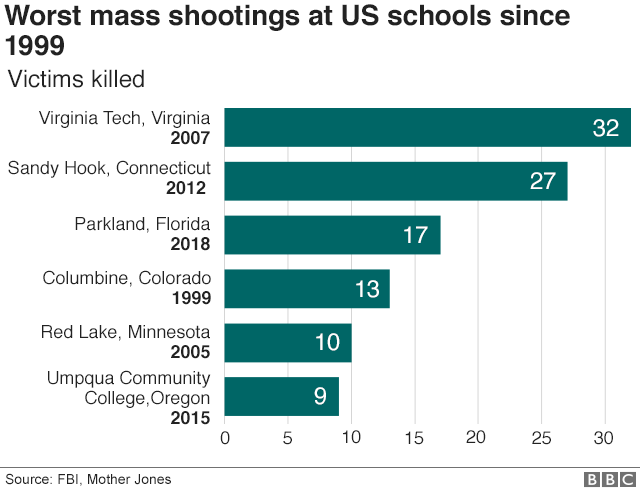
Earlier today there was a shooting in Indiana, where a student and teacher were both injured. May 18th, 2018 there was another shooting in Texas where there were 10 fatalities and 10 injuries occurred. CNN has created a list of shootings in 2018 here.


The Statistics of School Shootings


In the Washington Post there was an article that said "the statistical likelihood of any given public school student being killed by a gun, in school, on any given day since 1999 was roughly 1 in 614,000,000. And since the 1990s, shootings at schools have been getting less common.


Monday, May 21, 2018

Hawaii in Chaos 5/17/18 12:15pm Updated 5/21/18 10:28am


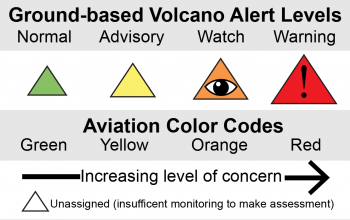
Alert Levels and Aviation Color Code
Before getting into the events, having an understanding of terminology is useful to know. Updates and warnings are given through specific colors and wording. 
Image result for usgs volcano signs alerts and colors

Chronological Order of the Events

May 3rd

Kilauea erupted on the Big Island of Hawaii after hundreds of earthquakes.

May 4th 
A magnitude 6.9 earthquake shook the island. The earthquakes created some cracks in the ground.

Friday, May 18, 2018

National SAFE KIDS Week


What is National SAFE KIDS Week?

National SAFE KIDS Week was created to bring awareness to accidental deaths of children. During summer months these deaths rise, as children are more at risk. 

SafeKids.org is the organization that is spreading the awareness and education of child safety. They believe that it is a global epidemic as explained in the picture below. 

A campaign was created to spread the education of things that adults can do. This campaign was called My High 5. The goal of it is for parents to do five things that will keep their kids safe.


SafeKids created checklists that parents can use to help prevent accidents, and keep their kids safer. There is one for cars, water, pedestrians, home, medication, play, and fire.
They also created safety tips for children of all ages, and for different types of risks.

Wednesday, May 16, 2018

Severe Storms Cause Havoc in the Northeastern States Claiming 5 Lives in May of 2018


Storms have been wreaking havoc in the northeastern states in the United States of America. The storms took five lives, and caused a lot of destruction. 


New York City encountered baseball sized hail during the thunderstorms, and thousands lost power. 


Wednesday, May 2, 2018

How to Protect Yourself From Zika in 2018


As the weather heats up, so does the risk for diseases like Zika and Lyme disease. In May of 2018, CDC has released a video their findings about the rise of disease:


With the increase of risk, many are wondering how to decrease their odds of contracting one of these potentially deadly diseases. Luckily there are many things that can be done. Here is a video we liked from WaysandHow with some recommendations and tips:


The CDC advises:
1.     Avoid places where there are outbreaks
2.    Be aware of times and places for certain exposures
1.     Ticks tend to be found in vegetative areas like grass
2.    Mosquitoes tend to like the daylight hour 
3.    Wear clothing that limits skin exposure 
1.     Use insect repellent on the outside of clothing for additional protection
4.    Check your body for ticks
5.    Use a bed net or a mosquito net
6.    Use insect repellent


You may be asking, "why would I need a mosquito net?" If you are planning on camping, laying out on a hammock, or traveling this summer, it would be a good idea to protect yourself. Bug repellent typically has to be reapplied every 3-6 hours. Instead of simply relying on bug repellent, have another line of defense. If you are looking for a quality net, here is an option.


For more information on Zika follow this link. 

Earth's Deadly Storms: Hurricanes


What Should I Know?


There are many factors that contribute to the creation of a hurricane. Hurricanes can vary in size and strength. This impacts the damage that occurs. National Geographic explains how hurricanes work: 


Three Strong Earthquakes Shake the Pacific on May 1st 2018


Fiji Was Hit

On May 1st, Fiji endured three separate earthquakes. The first was that occurred was 64 miles from Lautoka Fiji, and it was rated as a 5.2 on the Richter scale. The second was 154 miles from Fiji, and it measured in at a 5.9. The third occurred about 10 minutes after the second and it was 157 miles from Fiji, measuring in at a 4.7.


What Should I Know?

Earthquakes are rated on the Richter scale. This scale depicts the earthquakes energy, which gives an idea of the damage it can cause. Below is a video of Bill Nye the Science Guy explaining how the Richter scale works:


How do earthquakes work anyways? What is an earthquake? National Geographic explains it all:


How Do I Stay Safe?

Earthquakes are natural disasters, and they can't be stopped. Keeping your family safe is key. When a disaster arises, it can be scary, and being unprepared can be deadly, FEMA tells us what exactly to do.


Friday, April 27, 2018

Are You Prepared for Tornado Season?

Are You Prepared for Tornado Season?

What Should I Know?


A tornado can strike at any time of the year, but they are most popular March-May in the southern states, and summer months for the northern states. 
They are more likely to strike between 3:00pm-9:00pm, but can occur during any hour of the day. 

Image result for enhanced fujita scale


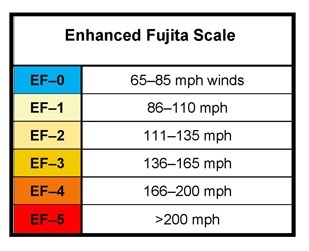
Tornadoes are categorized by the Enhanced Fujita Scale. The higher the number, the more damage is will probably occur. 


It is vital to know the difference between a tornado warning and a tornado watch. A tornado watch means that a storm is coming, and there is a possibility of a tornado. A warning means that there is already a tornado in the area. 


    What Should I Do During a Tornado?    
          

What Should I do After a Tornado?


How Do I Prepare?
1.     Have a plan before the storm strikes
2.     Have an emergency kit
3.     Know the dangers and signs for tornadoes
1.     Dark greenish skies
2.     Large hail
3.     Low clouds; especially if they are rotating
4.     Loud roar
5.     Any alerts being broad casted
4.     Have a list of your assets/valuables in case damage occurs to your property